Claude helps reveal a protein 'vault' in bacteria in 3D, a 40-year-old cellular mystery
Anthropic said its biology team used Claude to obtain the first 3D structure of a vault particle in bacteria. These protein barrels have had an unknown function since 1986. The AI cut part of the work from weeks to days, although it also made mistakes.
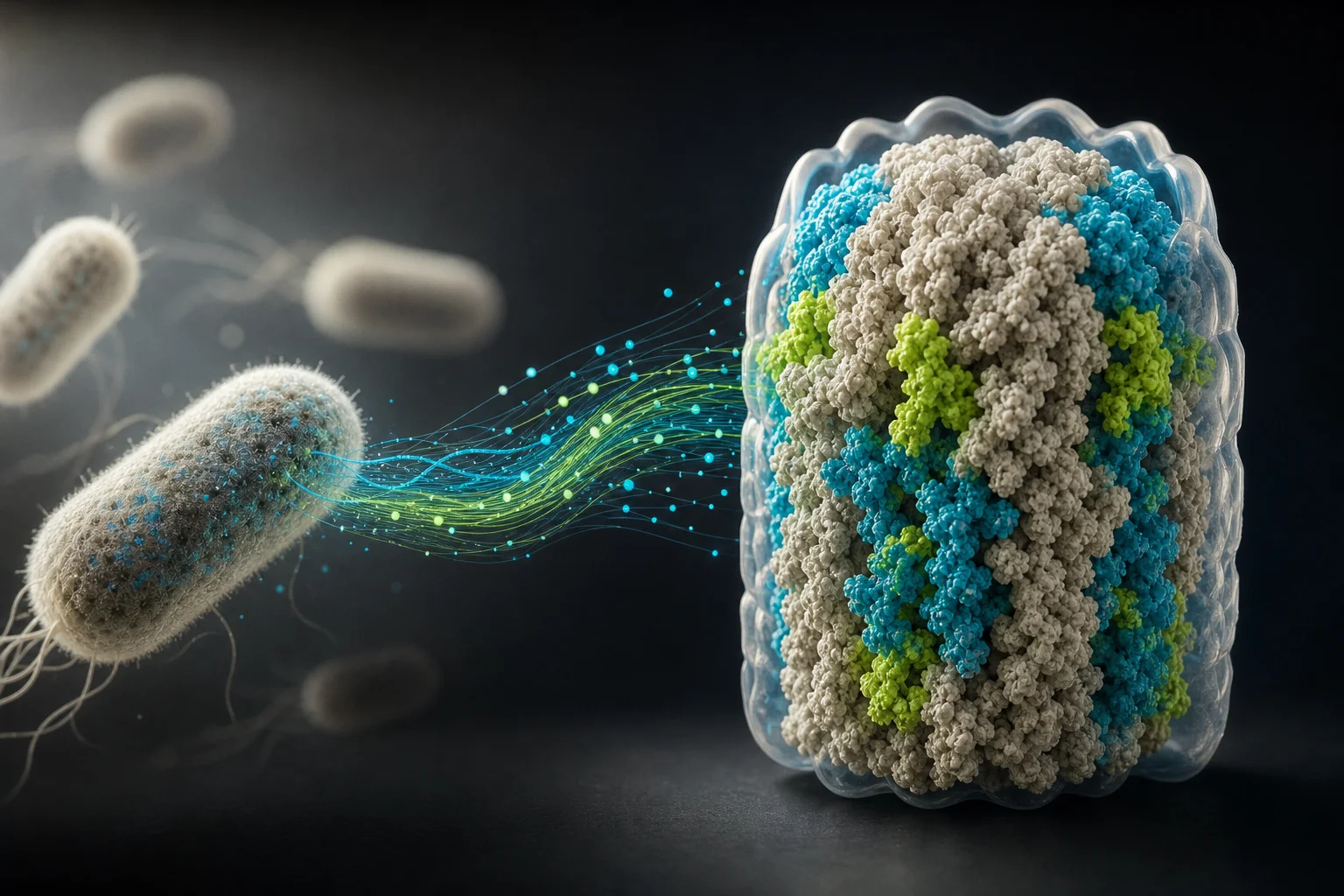
Since 1986, scientists have known that barrel-shaped objects float inside many cells, gigantic by the standards of proteins. Nearly four decades later, no one has managed to explain what they are for. On November 4, 2026, Anthropic, the company that develops the artificial intelligence assistant Claude, announced that its biology research team had worked with the model to obtain the first three-dimensional structure of one of these particles in bacteria.
They are known as vault particles. Researchers Leonard Rome and Nancy Kedersha discovered them, and they are among the largest protein structures in our cells. Until now, they had only been found in complex organisms, such as animals and plants. According to Anthropic, its work shows that similar proteins found in bacteria, and in the viruses that infect them, can also assemble to form these vaults.
The finding is scientifically interesting because it expands the map of where these structures exist. Obtaining their 3D structure means knowing their complete shape and how their pieces fit together in space. The company argues that finding them in simpler life forms could make it easier to investigate their function in our own cells. However, Anthropic does not claim to have solved the mystery. It says its results "could bring us closer" to the answer.
AI speeds things up, but it also makes mistakes
For Anthropic's life sciences team, the project also served as a test of what artificial intelligence can contribute to science and of its limits. The company says Claude significantly accelerated some stages. Determining the particle's structure by hand would have required weeks or months of painstaking work, and with the model it took days.
The company also acknowledges that Claude made some simple mistakes along the way. To correct them, the biology team worked alongside the company's machine learning researchers, the specialists who train and improve AI models. It is a reminder that, at least in this case, the tool needed expert supervision.
The announcement posted on X does not specify which version of Claude was used or which laboratory techniques were used to obtain the data. Nor does it say whether the results have been reviewed by other scientists or published in a peer-reviewed journal. Anthropic points to a longer article on its website, titled "Investigating vault particles with Claude".
It remains to be seen how the groups that have studied these particles for years will receive this work and whether other laboratories can independently confirm the results. For research teams in Latin America, the case offers two lessons: an AI assistant can cut the time needed for long, repetitive tasks, but its results must still be reviewed by specialists.
Source: Anthropic on X